A BIG hands-on activity about crystal growth.
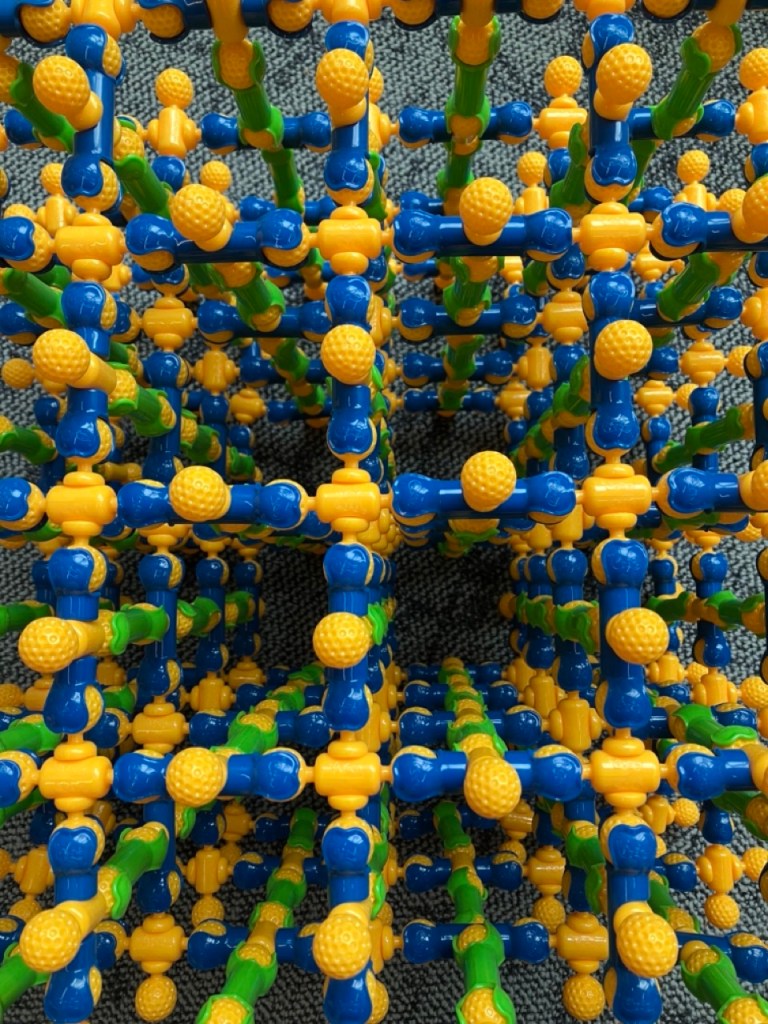
‘Giant Interactive Crystal Growth’ is a big hands-on activity about crystal growth using Zoob construction toys. Lots of people can get involved at once and there are plenty of talking points about crystals and crystal growth.
We start with a ‘seed’ layer, to provide a template onto which more pieces can attach to grow the Giant Crystal. As people attach pieces, questions such as “What is a Crystal?” and “How do they grow?” come up in the conversation, and we can discuss concepts such as crystallinity, crystal growth, and epitaxial growth. After a while, a new layer, much like the first, forms.

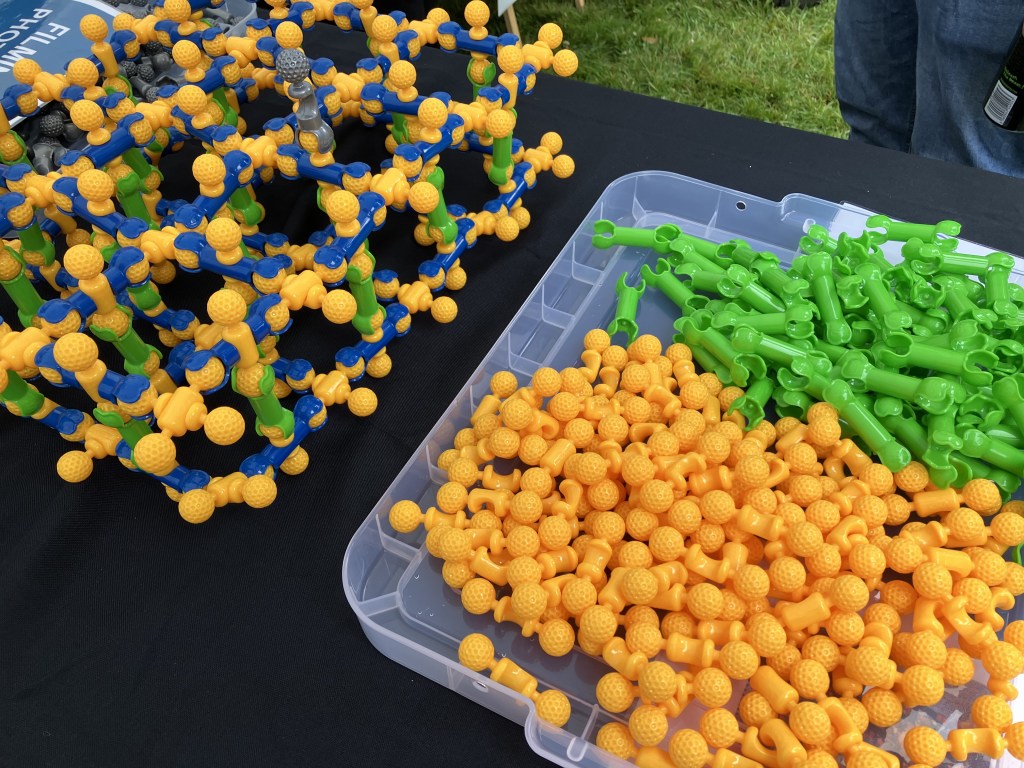
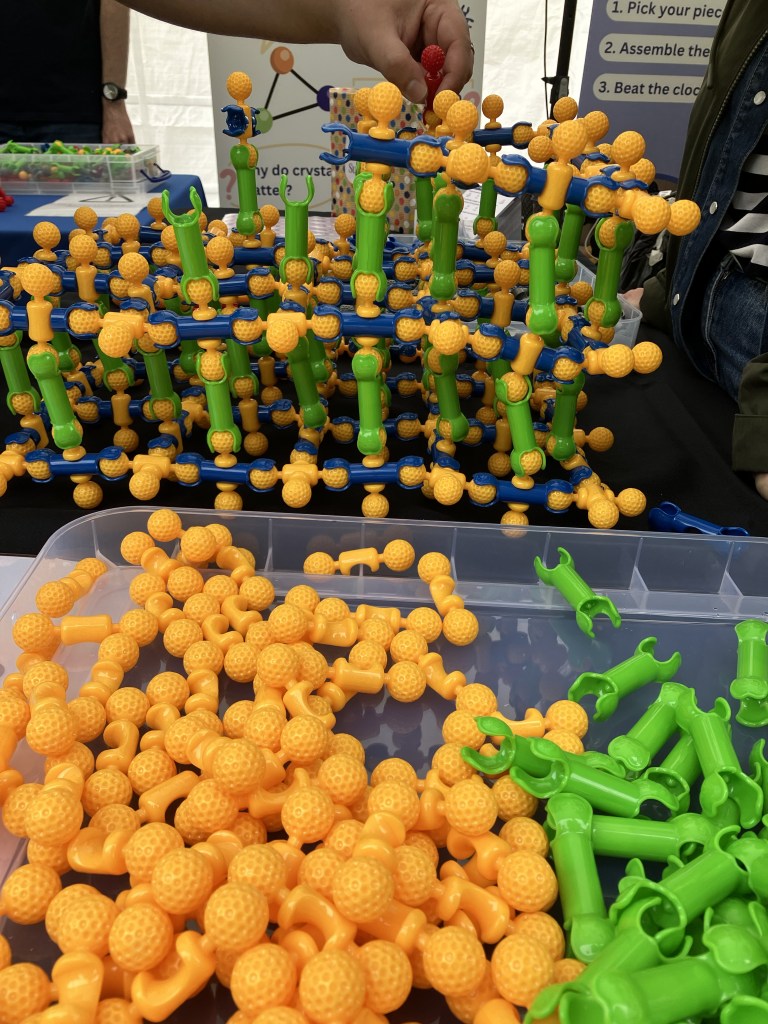
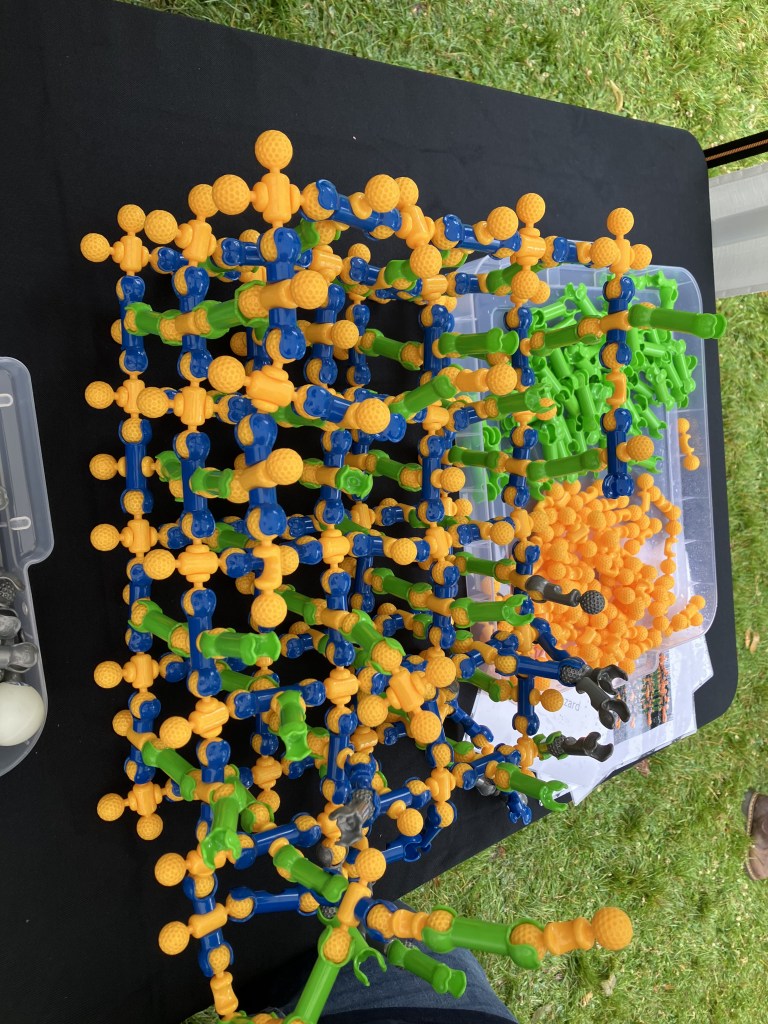
As the activity goes on, it’s quite likely that the addition of more pieces starts to deviate from the ‘perfect’ crystal of the first layer. This could be because people want to see what happens when they break the rules (fair enough), or because we introduce different pieces that can’t follow the same pattern of connections. This brings up topics such as defects, disorder and amorphous material into conversation. Sometimes, the defects are corrected and the crystalline region continues to grow, but otherwise, our Giant Crystal becomes a little less crystalline! Finally, we end up with a giant assembly of pieces, within which there are ordered regions and the original crystal can (usually) be identified.

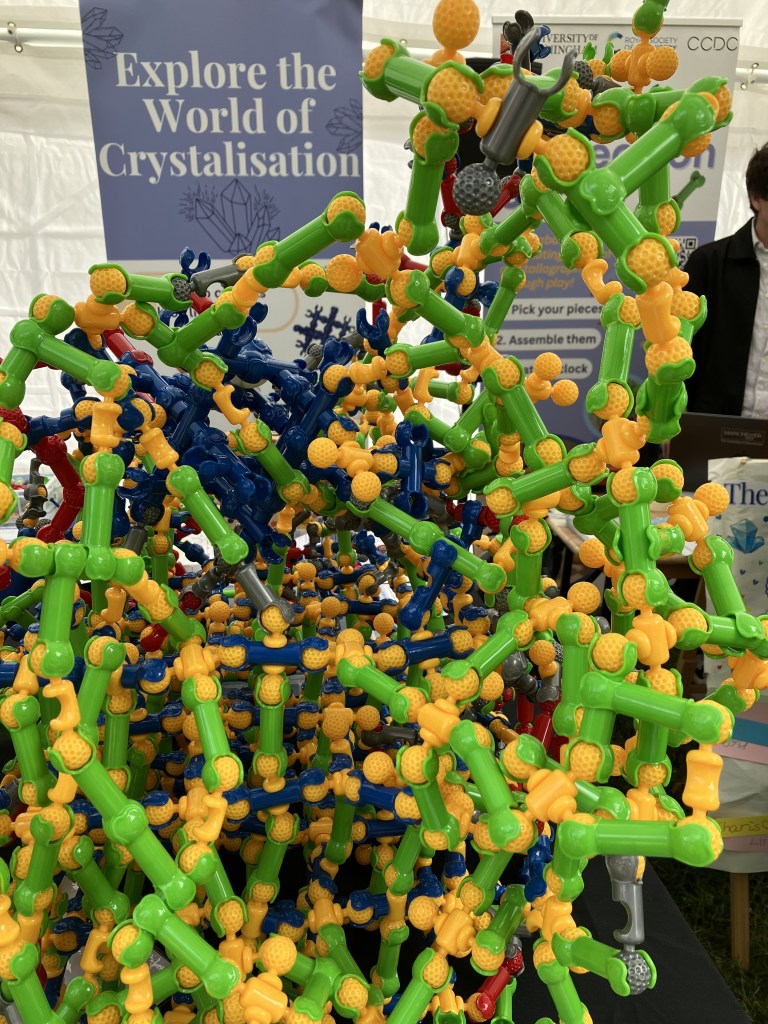
In our Giant Crystal model, there are spaces between the parts that are like the pores in a Metal–Organic Framework (MOF). This gives us a further opportunity to talk about the relationship between the crystal structure and its properties; i.e., structure-property relationships. In this case, the spaces enable us to trap pieces within the crystal, like molecules inside a MOF.
At the end of the event, we have to pack the Giant Crystal away. It is a little sad to see all that hard work be deconstructed but many hands make light work!
Giant Interactive Crystal Growth was developed in 2024 by Hamish Yeung with UoB Chemistry undergraduate students Alice Walker and Keyuan Huang and supported by a CCDC Engagement Grant. Original inspiration and Zoob pieces were provided by Tim Easun.
(Information for demonstrators can be found here)
 Yeung Research Group at UoB