Get hands-on with the science of crystals and crystallisation with these fun activities, which can be done at school or at home using common toys and materials. Download all five activity sheets here as Word files (4 MB .zip file) or jump to the activities and individual downloads via the links below:
(i) Crystallisation of a magic crystal tree, (ii) Jigsaw puzzle nucleation, (iii) Magnetic tile crystals, (iv) Mineral crystals, and (v) Construction toy self-assembly.
Demonstrator instructions can be found here.
(i) Crystallisation of a magic crystal tree
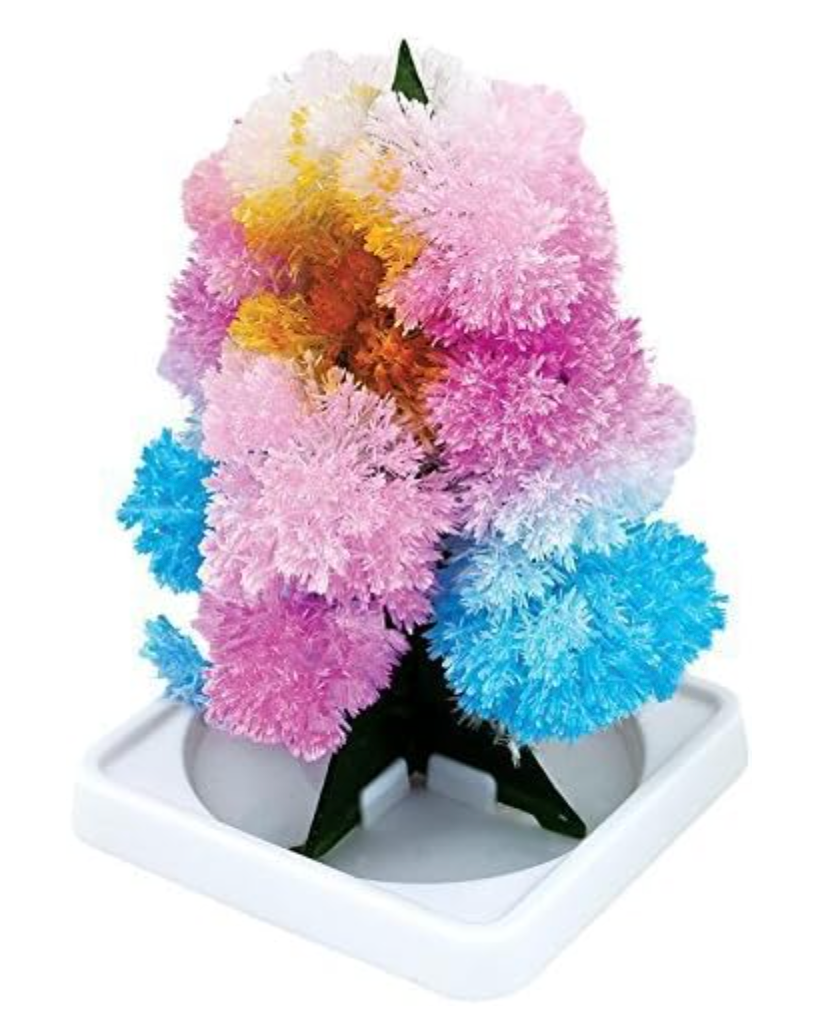
This activity is about how crystals form. Prepare a magic crystal tree and watch as crystals form and grow on its ‘branches’ to make its ‘leaves’.
Crystallisation of a magic crystal tree instruction sheet (Word file, <1MB download)
You will need a magic crystal growing tree (available online for ~£1-3), a place to leave the tree undisturbed for a few hours and a magnifying glass. The whole tree takes 4-6 hours to grow, depending on the ambient conditions, so it’s a good one to come back to every now and again and see how it’s changed. Setting up the activity takes just a few minutes:
Here is the final crystal tree that we grew at CoCoMAD festival 2024:
(ii) Jigsaw puzzle nucleation
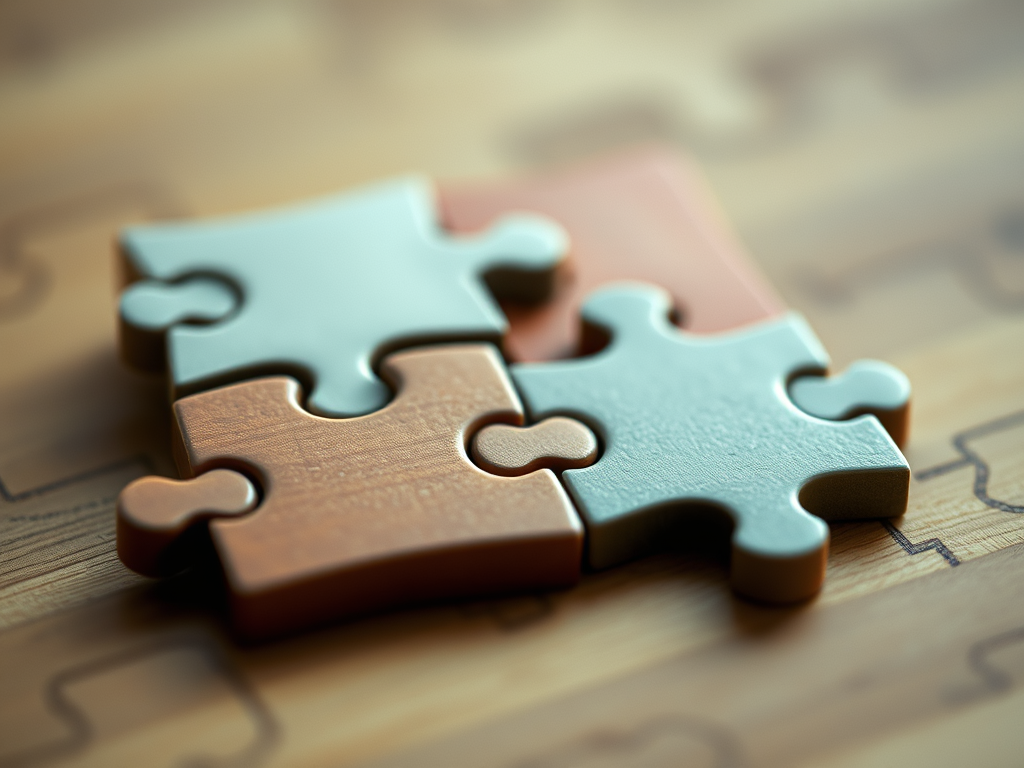
This activity uses the assembly of a jigsaw to introduce the concept of crystal nucleation. How do you start assembling the pieces of a jigsaw puzzle? From the centre? From the edge? From a corner? Does it matter how you do it?
Jigsaw puzzle nucleation instruction sheet(Word file, <1MB download)
You will need a jigsaw puzzle and a timer (e.g., stopwatch or smartphone). The activity takes 5-15 minutes, depending on how hard the puzzle is! We recommend around 16 pieces, depending on ability.
(iii) Magnetic tile crystals
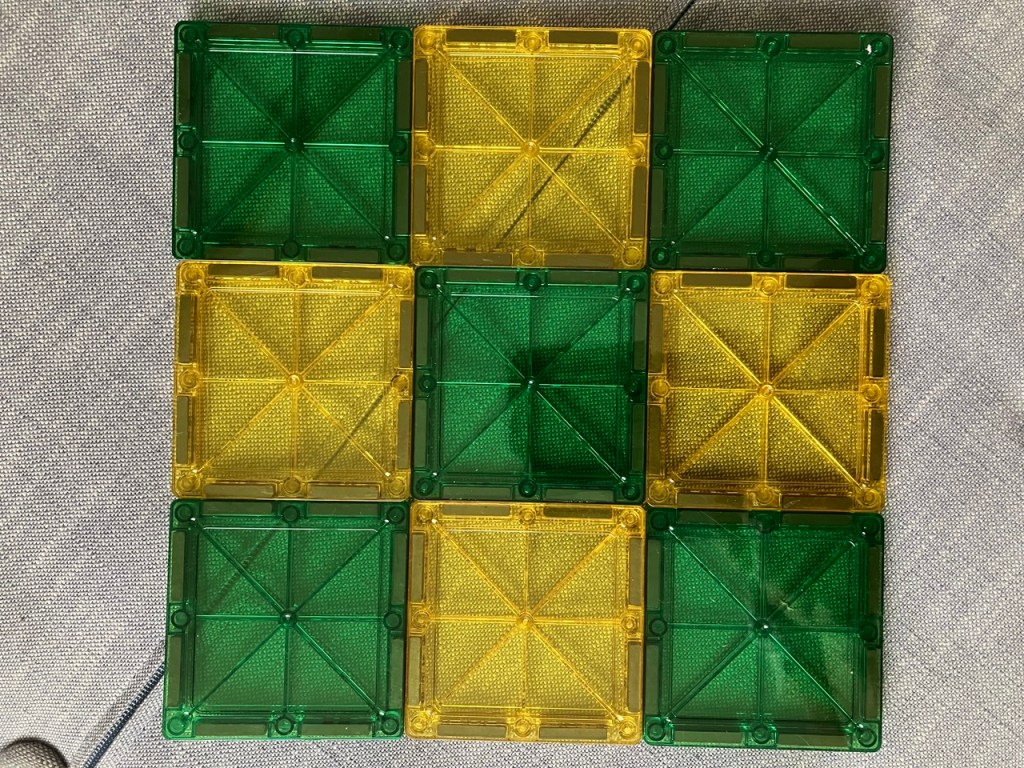
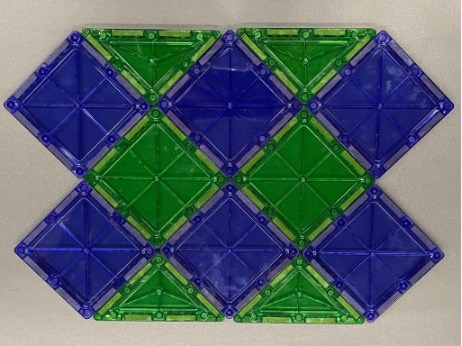
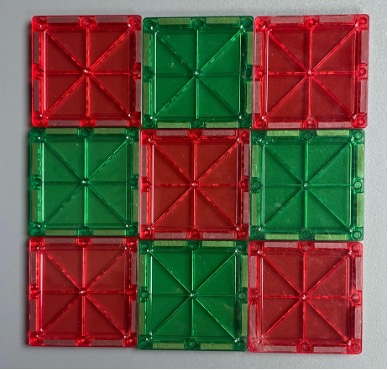
This activity uses magnetic tiles to illustrate the concepts of crystals, metal-organic frameworks and self-assembly. Make regular, repeating patterns with the tiles, and explore 2-D and 3-D tilings.
Magnetic tile crystals instruction sheet (Word file, <1MB download)
You will need a set of toy magnetic tiles (e.g., Magna-Tiles). The activity takes 5-15 minutes, or as long as you want to play!
(iv) Mineral crystals
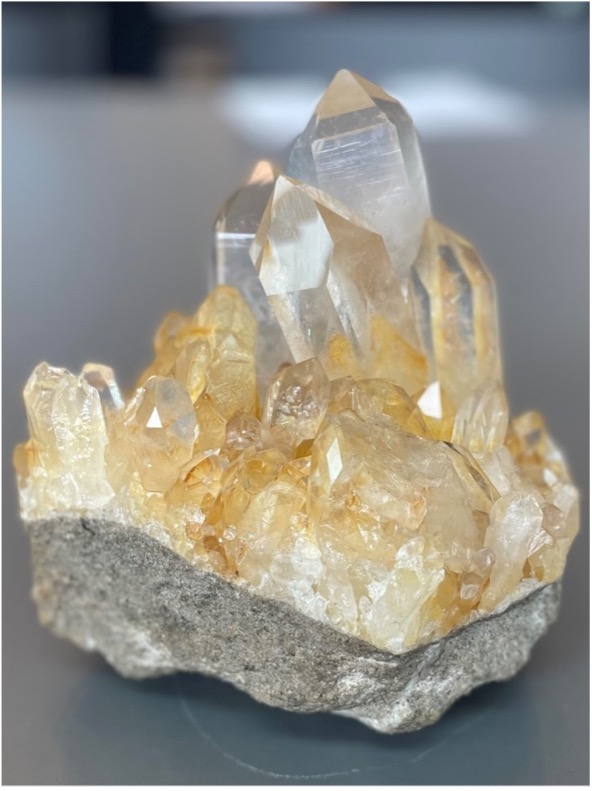
This activity examines the appearance of crystals, asking the question, “What is a crystal?”
Mineral crystals instruction sheet (Word file, <1MB download)
You will need one or more crystals, such as found in gemstones, jewellery or ‘healing crystals’, and a magnifying glass. You could even make your own crystal. For our events we use beautiful specimens of quartz and amethyst from the Laworth museum’s fantastic collection.
(v) Construction Toy Self-assembly
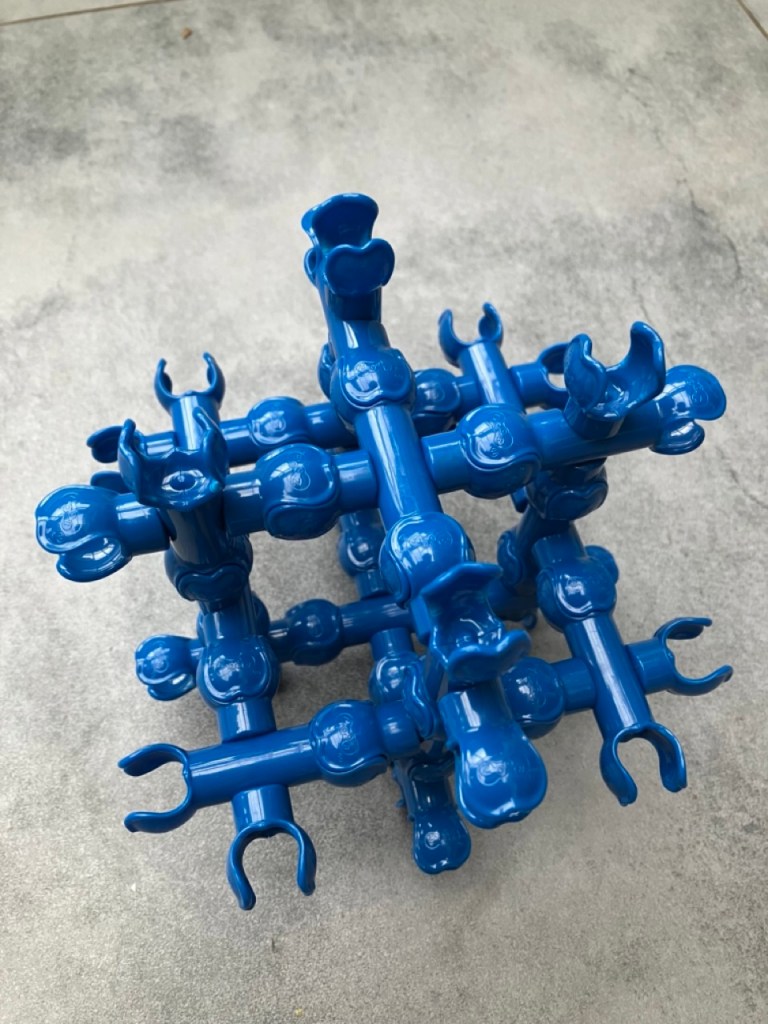
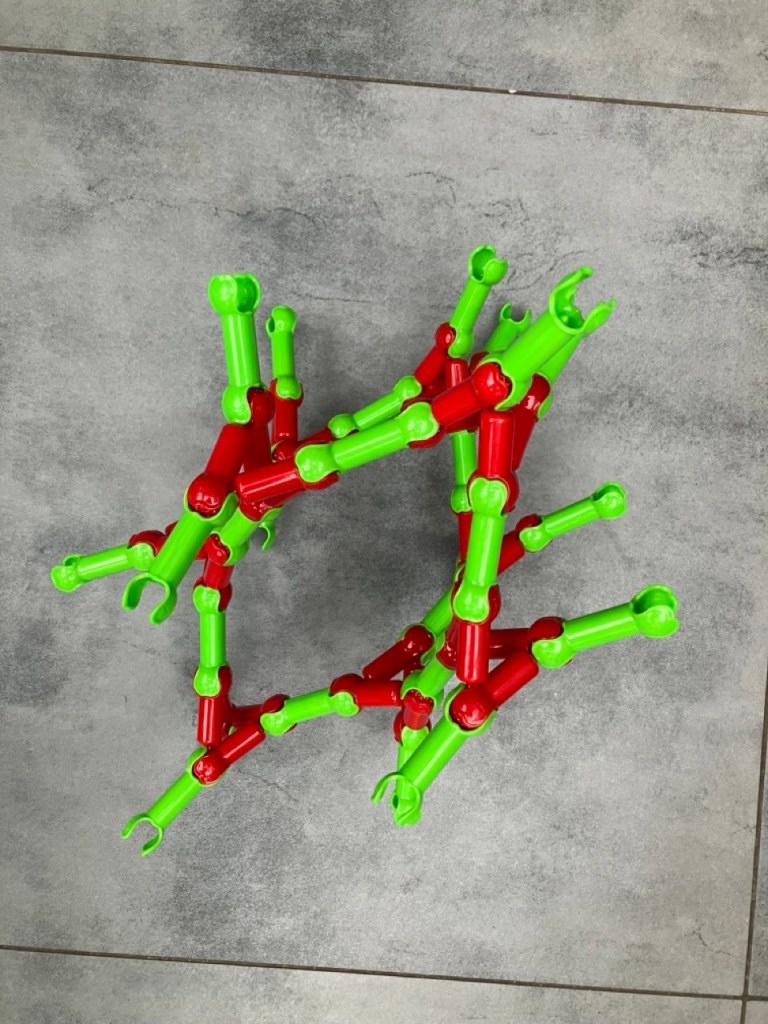
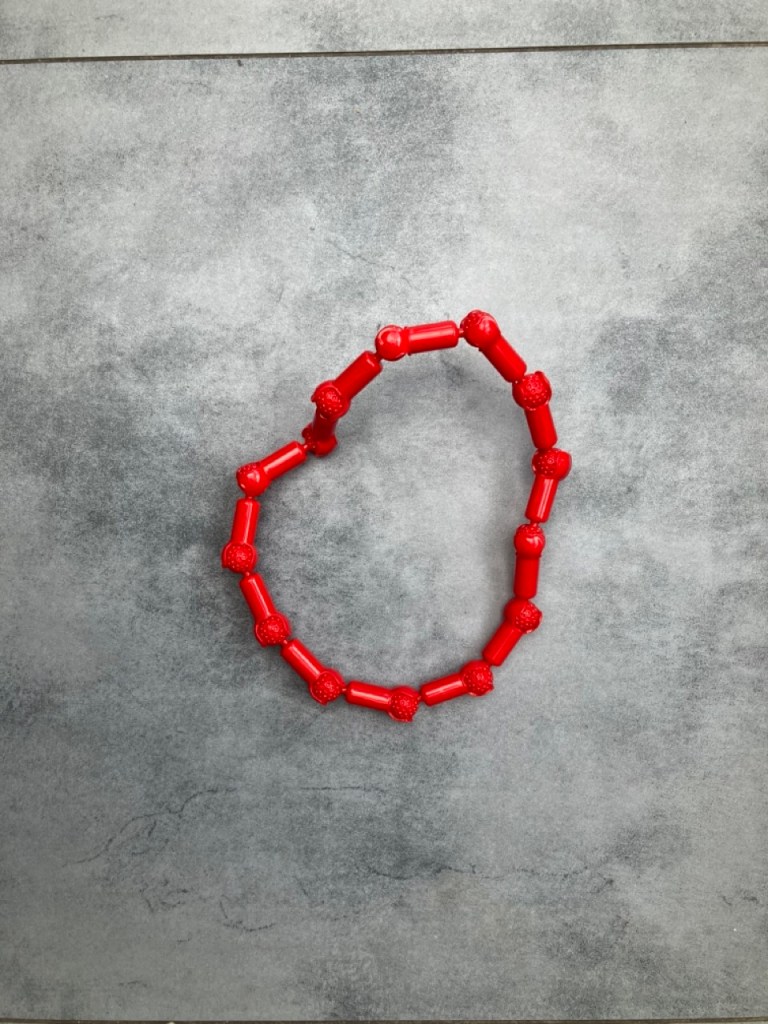
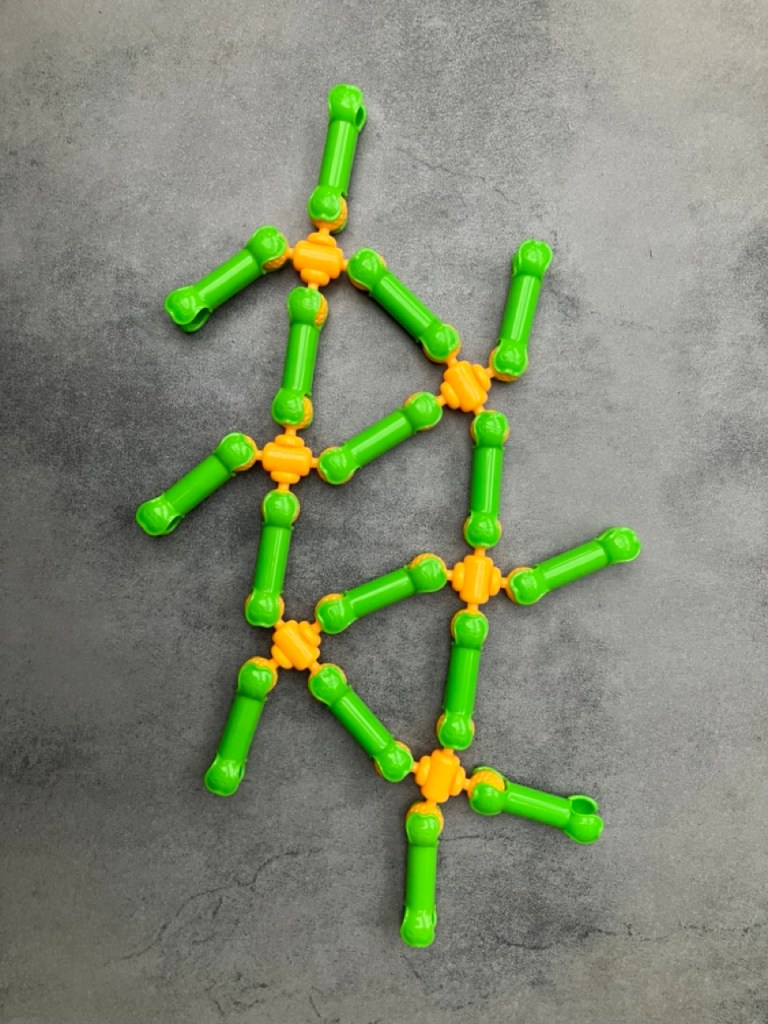
This activity uses connector toys to illustrate the concept of self-assembly in the context of molecular crystals, metal-organic frameworks and minerals.
Construction Toy self-assembly instruction sheet (Word file, <1MB download)
You will need a set of construction/connector toys, such as Lego, Duplo, k’nex, Octons, Sticklebricks etc. For our events we use Zoobs, because they have a limited and well defined set of connections that give rise to a diverse range of topologies.
Credits
These activities were developed by UoB undergraduate students Alice Walker and Keyuan Huang and were supported by a CCDC Engagement Grant called “MOF assembly – a public engagement activity about how new materials self-assemble and crystallise from their constituent molecules”.
(Demonstrator instructions can be found here)
 Yeung Research Group at UoB